Online stores have SEO problems that ordinary websites don’t: hundreds or thousands of product pages, thin and duplicate content, faceted filters that create endless URLs, and product pages that come and go. Paid ads can bring traffic, but the moment you stop paying, it stops. eCommerce SEO builds traffic that keeps coming — from shoppers who are already searching for what you sell.
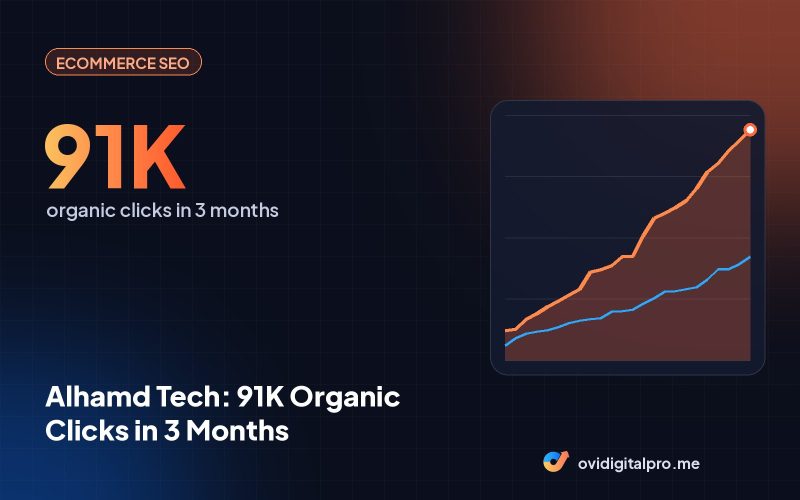
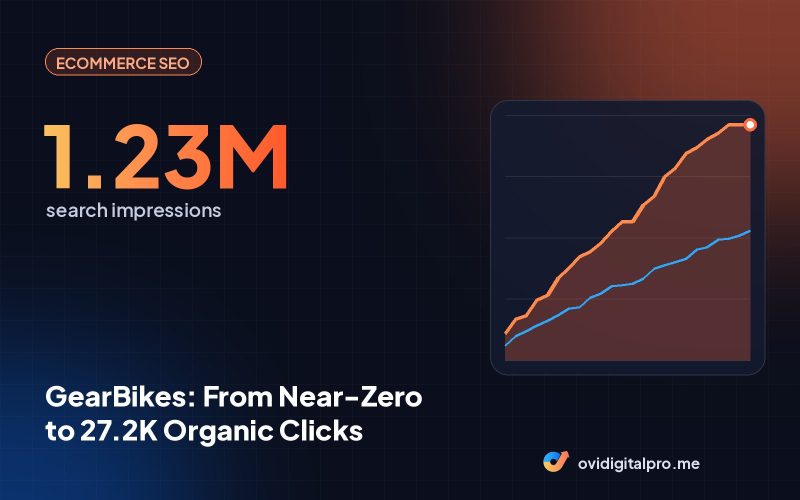
I have done eCommerce SEO for electronics, cycling, vape, toy and fashion stores on Shopify and WooCommerce, in Pakistan, the UAE, the United States and beyond. One store reached 91,000 organic clicks and 2.55 million impressions in three months; another went from near-zero traffic to 27,200 clicks.
Who this is for
- Shopify and WooCommerce stores that rely too heavily on ads
- Stores with a large catalogue that isn’t ranking or isn’t being indexed
- Brands launching new categories or entering a new market
- Store owners who have traffic but low clicks from Google (poor CTR)
Why category pages come first
Shoppers rarely search for a specific SKU. They search for “caliburn vape”, “beyblade launcher” or “gaming laptop in Pakistan” — category-level keywords with real buying intent and volume. Category pages also stay live while products change, and they collect internal links from every product inside them. That is why most of my eCommerce work starts there.
What’s included
1. Technical SEO for stores
- Crawl and indexing fixes in Google Search Console
- Faceted navigation and filter URLs controlled so they don’t create duplicates
- Canonical tags, pagination and out-of-stock product handling
- XML sitemaps and robots.txt set up correctly
- Page speed and Core Web Vitals, especially on mobile product pages
- Product, breadcrumb and review schema for rich results
2. Keyword research and mapping
- Category, brand and product keyword research
- Each keyword mapped to one page to prevent cannibalisation
- Long-tail and transactional keywords for growth
3. Category and product optimisation
- Titles, meta descriptions and H1s written for clicks and rankings
- Helpful intro and supporting content on category pages
- Unique product descriptions for your most important products
- Entity-based optimisation to strengthen topical relevance
- Internal links between related categories, products and guides
4. Content that supports sales
- Buying guides and comparison articles that link to categories
- Answers to the questions shoppers ask before they buy
5. Authority and links
- Backlinks from niche-relevant blogs and resource pages
- Contextual guest posts pointing at key categories
- A natural anchor-text profile
6. Monitoring and CTR optimisation
- Monthly Search Console review of clicks, impressions, CTR and positions
- Rewriting titles and descriptions of pages with high impressions but low clicks
- Expanding into new keywords as rankings grow
My phased process
- Month 1 — Technical foundation: indexing, speed, sitemaps and product schema.
- Month 2 — On-page: keyword mapping, categories, products and internal links.
- Months 3–4 — Authority: niche backlinks and guest posts.
- Ongoing — Growth: CTR tests, long-tail expansion and content.
Doing things in this order matters. Links and content work much harder on a store that Google can crawl and understand properly.
Results
- Alhamd Tech (electronics, Pakistan): 91K clicks and 2.55M impressions in 3 months
- GearBikes (cycling): from near-zero to 27.2K organic clicks
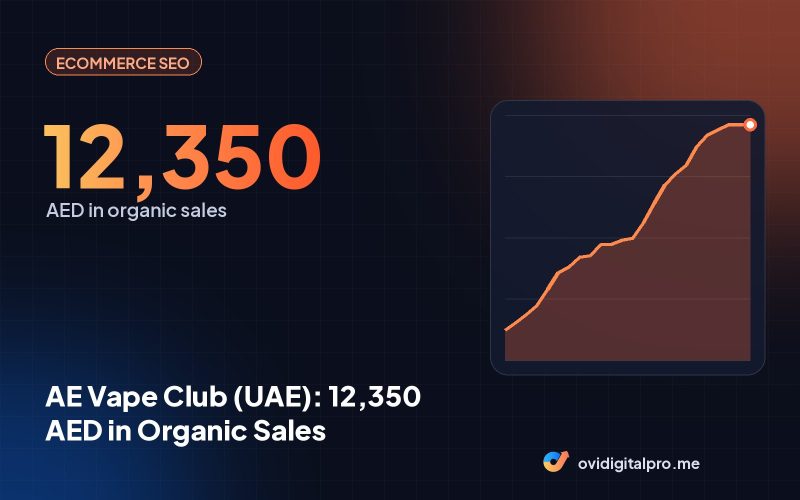
- AE Vape Club (UAE): 12,350 AED in sales from organic traffic
- BeyWarehouse (toys): about 15.7K monthly organic visitors
Platforms
I work with WooCommerce and Shopify stores. Because I am also a developer, I can implement technical changes on WooCommerce directly — templates, schema, speed and URL structure — instead of only recommending them.
Want to know what’s holding your store back? Send me your store URL and I’ll share the three biggest SEO issues I find, free.
Frequently asked questions
Do you work with Shopify and WooCommerce?
Yes. I work with both. On WooCommerce I can also implement technical changes directly in the code.
How long until my store sees more organic sales?
Technical and on-page improvements often show results within 2–3 months. Competitive categories that need authority can take 4–6 months or more.
Will you rewrite all my product descriptions?
We start with the categories and products that bring the most revenue. Large catalogues are improved in priority order rather than all at once.
How do you handle filters and duplicate pages?
Filter URLs are controlled with canonicals, noindex rules or URL parameters so they don’t create thousands of thin duplicate pages.
Can SEO replace my paid ads?
SEO reduces your dependence on ads over time, because organic traffic keeps coming without paying per click. Many stores run both while SEO grows.